



Abbiamo gia scritto di Tim Yoon e del fatto che ci ha introdotto seriamente alla pesca su Tipota, molto prima di salirci.
In questi 18 mesi di navigazione Tim è stato tra gli amici che più ci ha seguito, sempre attento alla nostra navigazione, talvolta preoccupato, ci ha sempre fatto sentire di esserci vicino; e poi lui è sempre il primo a riccevere le foto dei pesci che peschiamo.
Qualche volta lo abbiamo pure chiamato in video per fargli vedere le prede.


Quando eravamo a Panama con Ed e la sua famiglia, avevamo telefonato a Tim e, in breve lo avevamo convinto a pianificare anche lui un periodo su Tipota; era Marzo 25 e abbiamo deciso per ottobre, alle Tonga, le ultime isole del pacifico prima della NZ. Ed ci accompagnerà nella traversata per la NZ e pensavamo di avere qualche giorno di sovrapposizione con Ed e Tim, ma alla fine non si è riusciti ad incastrare le date.
Così il 5 di Ottobre andiamo all’aeroporto di Vavau ad accogliere Tim che ha volato da Kuala Lumpur, via Hong Kong (dove ha sfiorato un Tifone) e Fiji, quasi due giorni in totale.
L’arrivo di Tim è stato come l’arrivo di Babbo Natale… ci ha portato un sacco di regali, dagli occhiali da sole Oackley graduati di Laura (che avevamo perso a Raiatea), al nuovo SUP, dalla canna da casting pesante ad una infinità quantità di esche australiane e materiale da pesca vario. Adesso siamo attrezzati fino all’oceano indiano.

Ci ha anche portato un sacco di cose da mangiare asiatiche che ci mancavano dai giorni di Singapore: Laksa, curry, prawn soup… che ci ha cucinato.
E poi una bottiglia di preziosissimo whiskey scozzese per me e una di champagne per Laura.
Tim è abituato al mare visto che va spesso a pesca, sia nello stretto di Malacca che nel mar Cinese, ma non era mai stato su una barca a vela; comunque si è adattato subito e benissimo.
Si è fermato con noi quasi due settimane, dal 5 al 18 Ottobre, Laura come sempre ha organizzato le attività, ma nella sostanza abbiamo gironzolato lo splendido arcipelago di Vavau.
Il piano originale era di navigare insieme da Vavau a Hapai, da lì Tim avrebbe dovuto volare a Nuku Alofa, ma questi voli interni delle Tonga, sono operati dalla compagnia Luluthai che ha un solo aereoplanino per la tratta… e spesso, anzi spessissimo i voli vengono cancellati.
E infatti per la settimana del 12 Ottobre tutti i voli sono stati cancellati per manutenzione del velivolo (!) e quindi siamo rimasti a Vavau. Tim è diventato un esperto della Luluthai…
Il tempo con Tim in barca è letteralmente volato, abbiamo fatto tante cose insieme, ma anche passato giornate rilassanti a fare nulla.
Uno dei primi giorni Tim ha fatto un post molto carino su Facebook, in cui ha scritto che su Tipota ha scoperto il piacere del relax, senza fretta o angoscia di fare tante cose, godendosi la natura e ovviamente pescando.


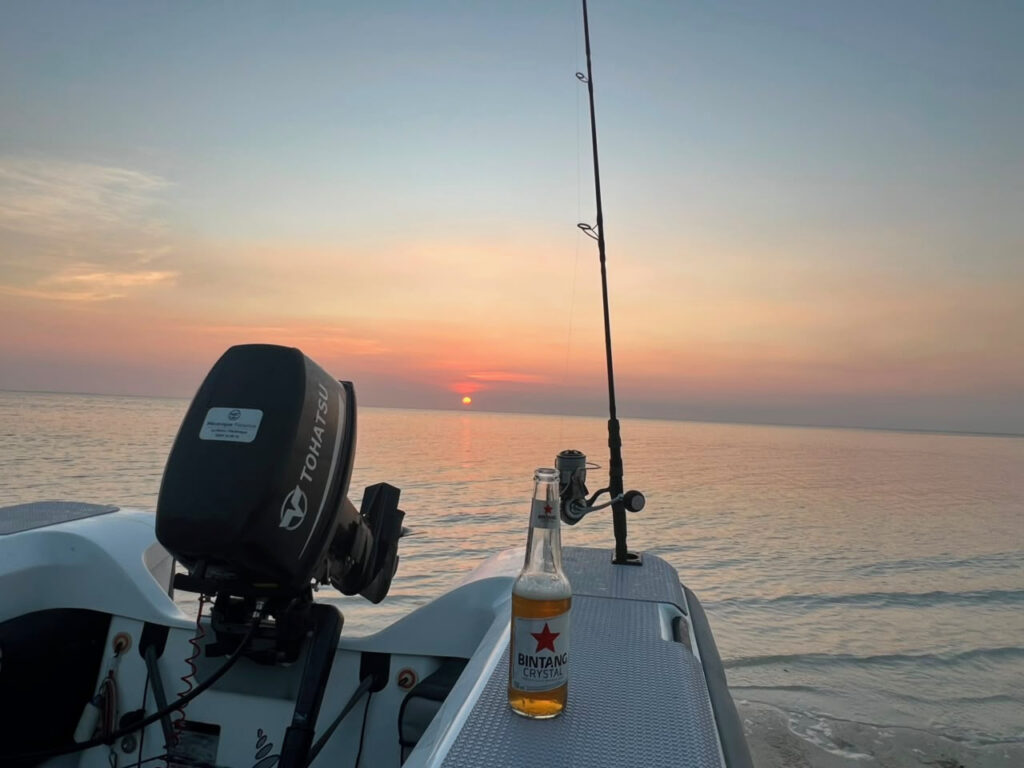
Si perchè Tim è un vero professionista e ha subito trasformato Tipota in un vascello da pesca. Fin dal primo giorno abbaimo avuto 4 canne da pesca con relative montature pronte all’uso: la nostra solita da traina, una canna da fondo, una canna da casting leggero con artificiale o ami con piumini per pescare le esche, e quella da casting pesante con il popper.
Nelle due settimane abbiamo pescato di tutto, dai barracuda alle coral trouts, dalle cernie agli snapper, dai GT a vari tipo di pesci coloratissimi di barriera. Ci è mancato solo il tonno o le prede da traina, ma solo perchè non abbiamo potuto navigare in mare aperto.


In un solo pomeriggio, alla baia 11, dalla spiaggia Tim avrà pescato 15 barracuda, che purtroppo vanno bene solo come esche, essendo predatori ad alto rischio Ciguaterra. Alla 39 ha pescato prima una cernia bellissima con striature azzurre e poi un GT grande che sono riuscito a filmare con la GoPro.
Insieme abbiamo visto le Balene e nuotato con loro, partecipato a due Tongan feast con danze e cena sulla spiaggia, fatto tanti snorkeling indimenticabili, conosciuto nuovi amici come Olaf e Diana e presentato a Tim i nostri compagni di viaggi come Deriska e Apnea. Incredibile la coincidenza che Tim conoscesse Olaf dai giorni in Cina.
Ovviamente Tim ha subito trovato sintonia con Mads che è anche lui un gran pescatore; ora abbiamo un gruppo whatsapp insieme.
Abbiamo cucinato insieme Sushi, Curry Chicken, Laksa i pesci che abbiamo pescato; giocato a Uno e passato un sacco di momenti semplici e sereni insieme. Ho l’impressione che a Tim sia piaciuta la vita in barca e che lo potremo riavere a bordo su Tipota.
L’ultima sera siamo tornati a Neiafu e siamo andati a cena al ristorante Harbourview, un poco malinconici, ci mancherà Tim.


Quandi ci eravamo salutati a Neiafu ci eravamo ripromessi di fare insieme un’altra settimana, magari più vicino, quando saremmo stati in Indonesia, e così e stato. Non appena abbiamo definito i nostri piani per l’indonesia, abbiamo confermato a Tim che ci avrebbe fatto piacere riaverlo su Tipota a Tual, nostro porto di ingresso in Indonesia orientale, tra il mare di Arafura e il mare di Banda.
Mano mano che la data si avvicinava abbiamo poi proposto a Tim di fare con noi un pezzo di navigazione d’altura; un esperienza che a lui mancava e che speravamo ci concedesse anche una buona occasione di pesca alla traina: Tim ha pescato di tutto, ma gli mancano i grandi pesci che si pescano alla traina in mare aperto: tonni, wahoo, marlin, Mahimahi…
Il piano è quindi di incontrarsi a Tual, navigare qualche giorno le Kei Islands e poi fare insieme la traversata fino a Banda Neira da dove Tim tornerà verso casa. Tim accetta con entusiasmo, nonostante il viaggio sia una piccola odissea: i collegamenti aerei in quasta parte di indonesia sono pochissimi.
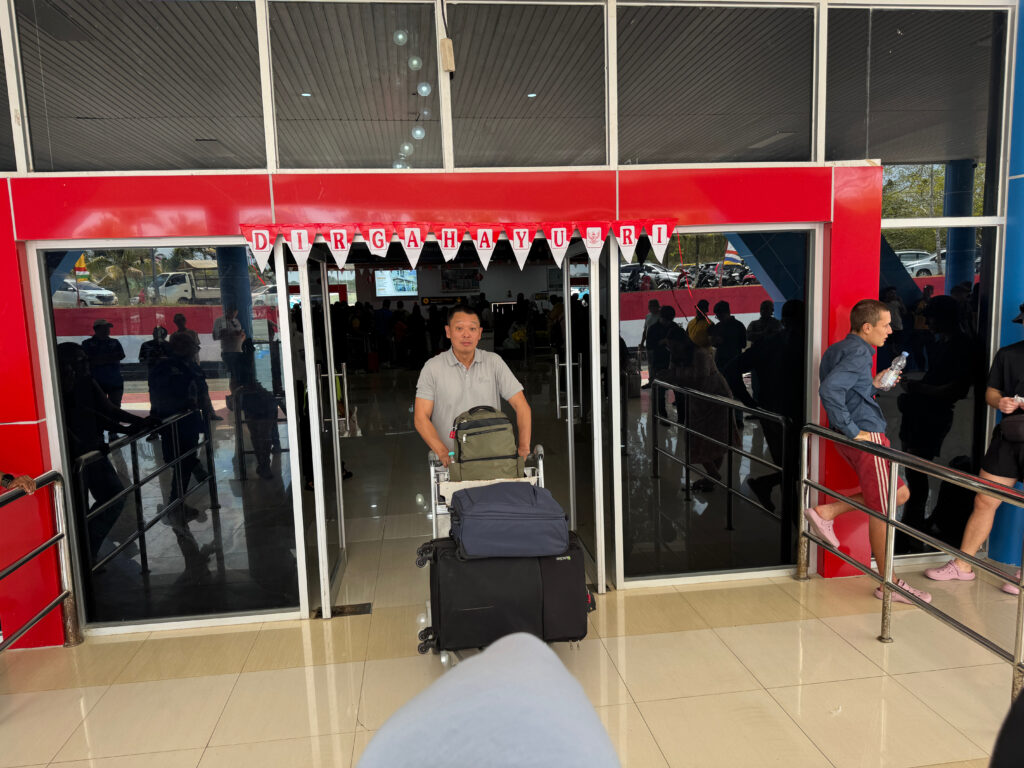
Il viaggio di Tim prevede partenza da KL per Makkasar sull’isola di Sulawesi, poi volo interno per Ambon, pernotto e volo la mattina per Tual; il ritorno invece con traghetto da Banda Neira per Ambon e a ritroso, Makkasar e Kl, sempre con notte ad Ambon.
Speriamo che gli orari siano affidabili!
Tutto fila liscio e venerdì 4 Settembre siamo all’aereoporto di Tual ad accogliere Tim.
Anche questa volta sembra sia arrivato Babbo Natale, ci porta un sacco di regali: attrezzatura da pesca di ogni genere, ottime bottiglie, cibo, sigari e tutto l’occorrente per installare lo Starlink mini.
Questa volta Tim è di casa, conosce la barca, i ritmi a bordo e siamo subito in sintonia; lui parla bahasa e la versione malese, seppur diversa, gli consente di comunicare con tutti, inclusi i bambini dei villaggi che vengono a visitare Tipota non appena buttiamo l’ancora.
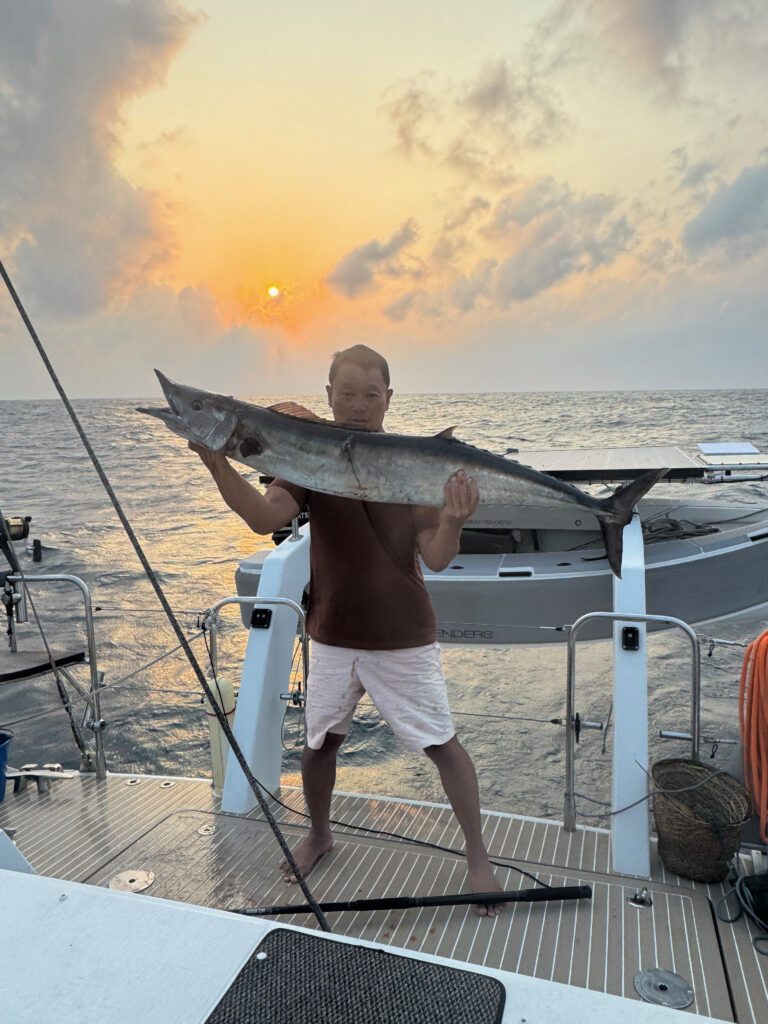
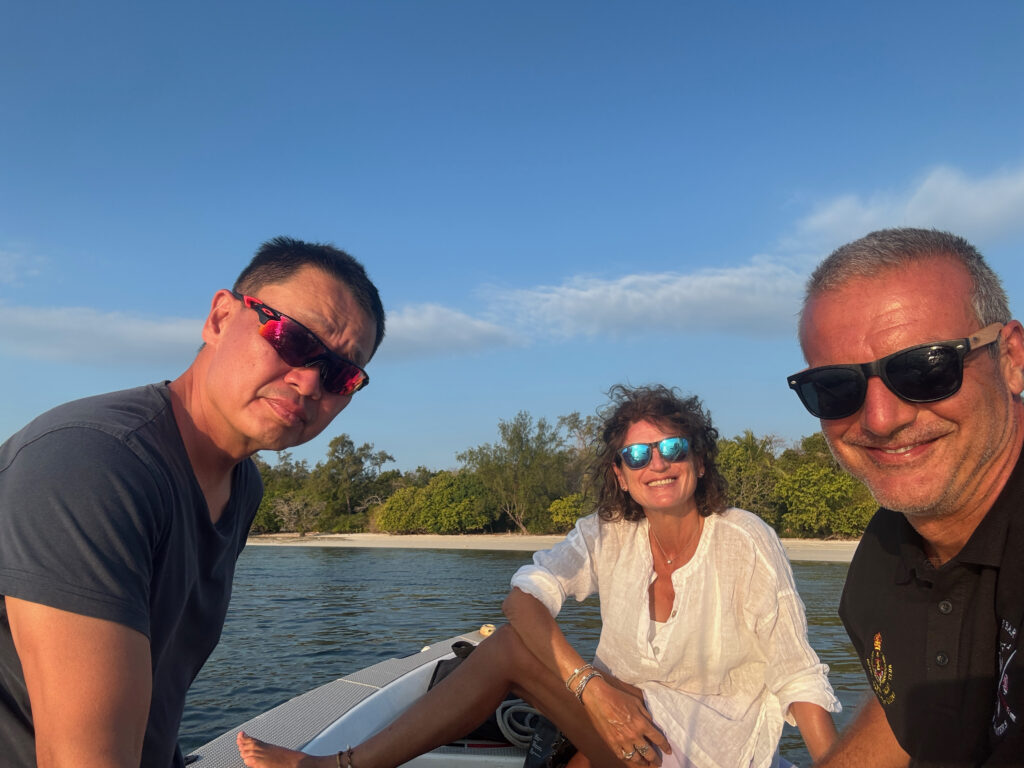
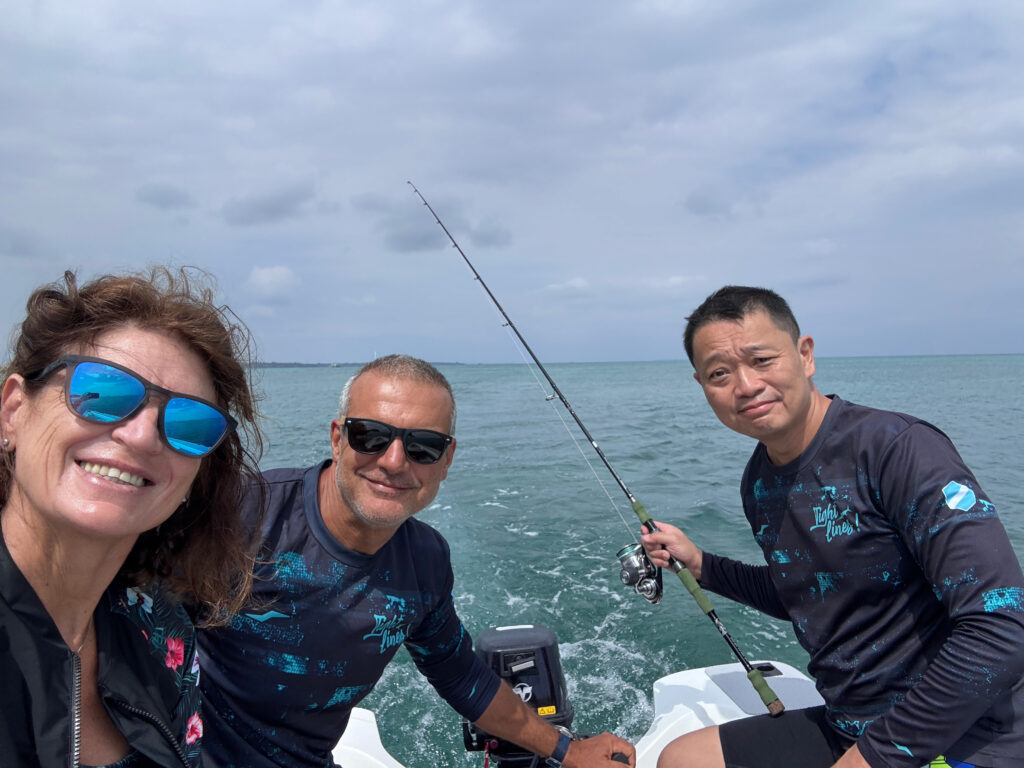
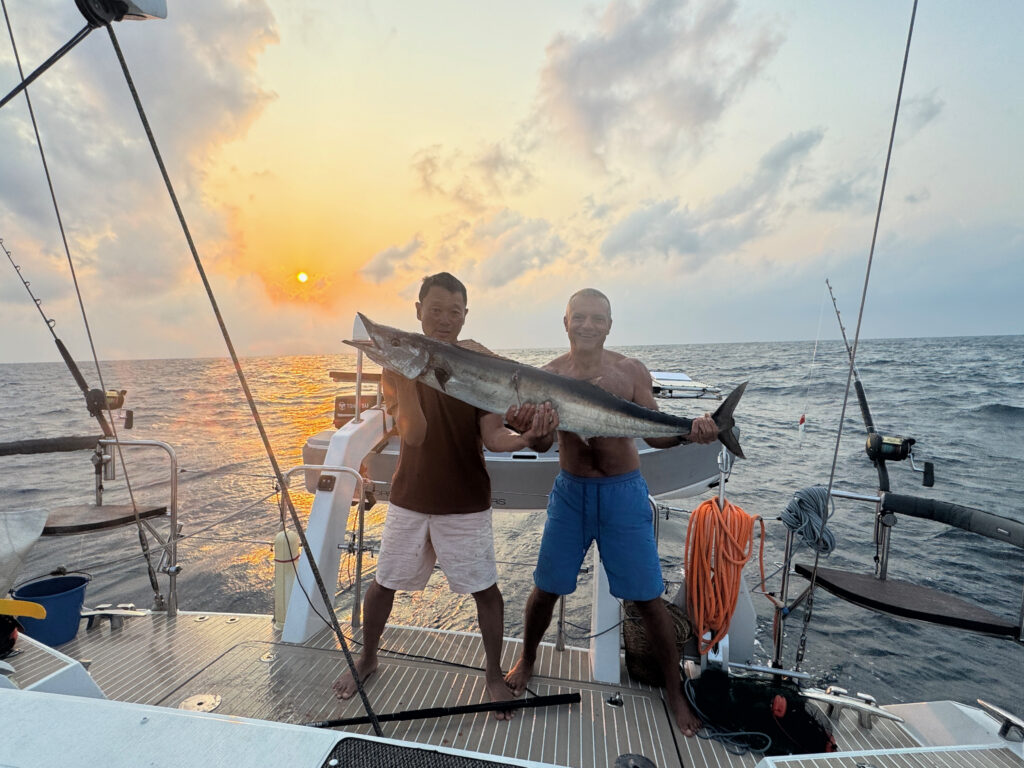
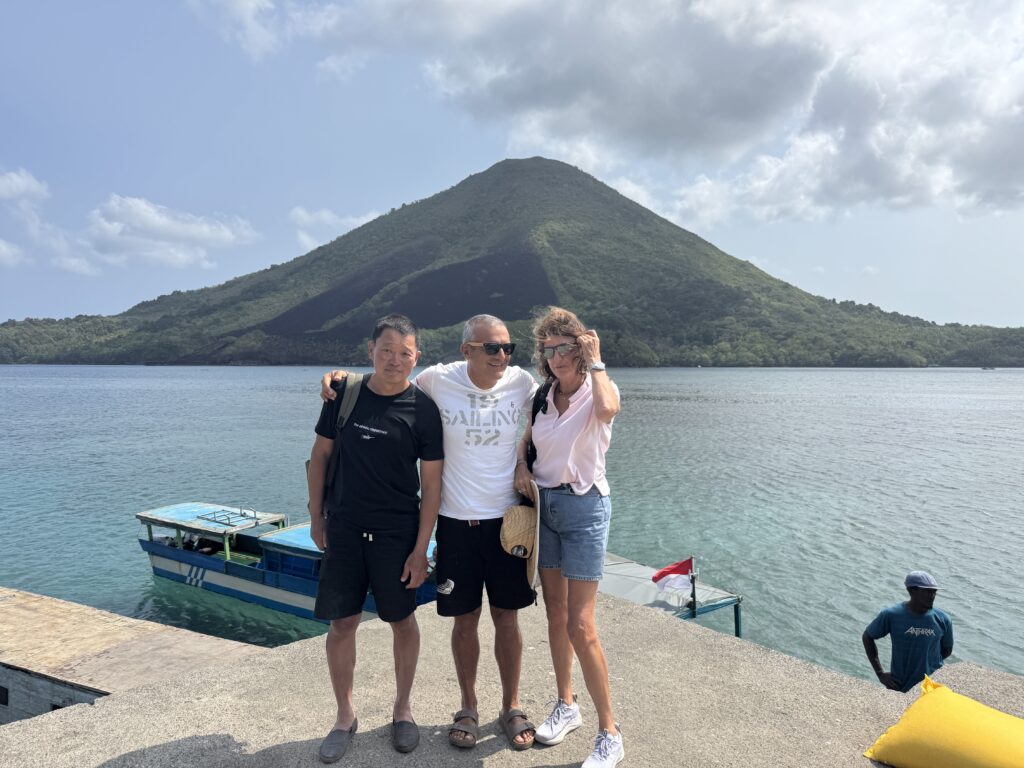
Passiamo dei giorni bellissimi, a Tual, alle Kei e poi a Banda Neira: peschiamo, giriamo le spiagge più belle e facciamo un’ottima traversata pescando un bel Wahoo di una ventina di Kg…. finalmente Tim ha catturato un preda degna di nota alla traina.
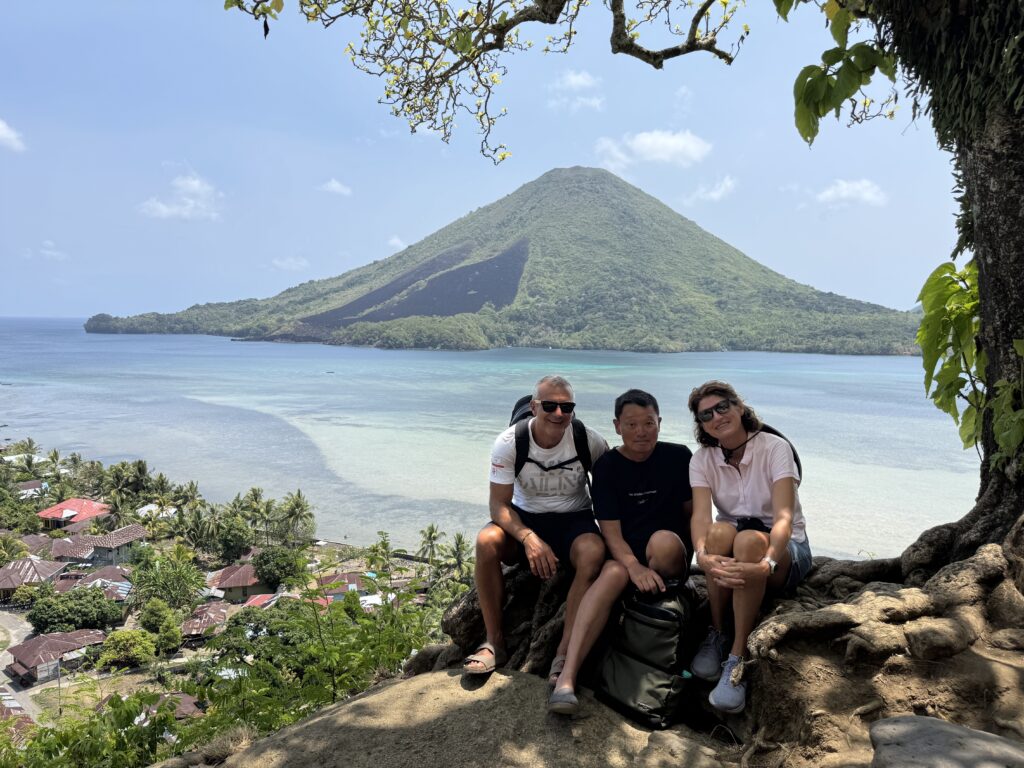
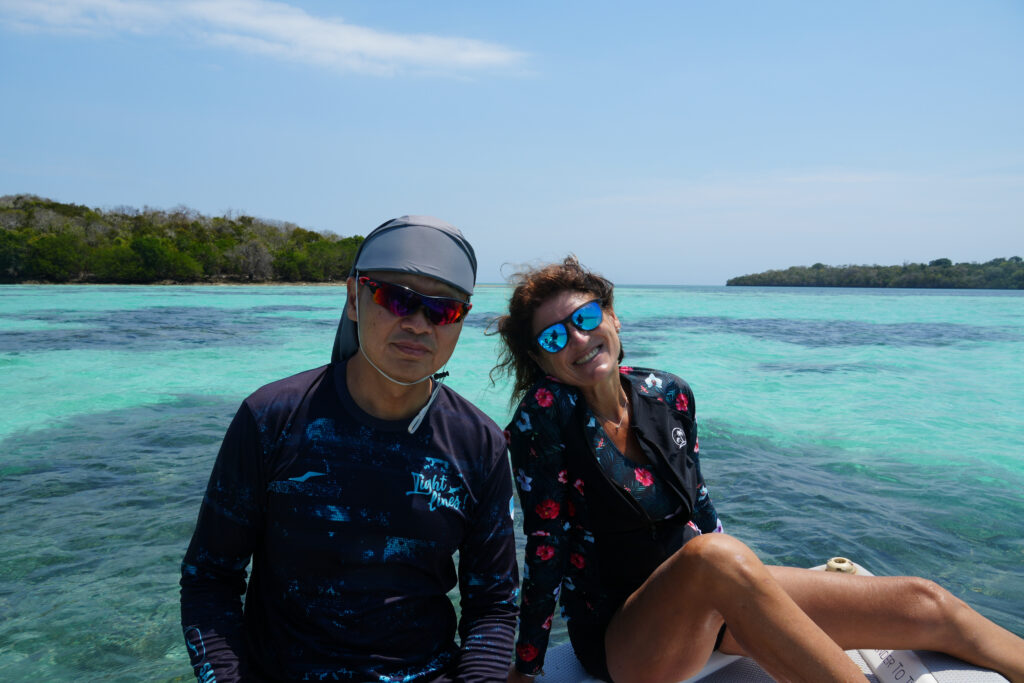
Tim è una persona gentile e sensibile, averlo a bordo è facile e piacevole, le giornate scorrono senza stress e si vede che si diverte come noi con le cose semplici che la vita a bordo offre.
Una sera ci ha cucinato il Laksa e un’altra il curry, ci ha portato fuori a cena a Banda… insomma ci ha proprio coccolato con il suo modo discreto e gentile che lo fa essere un amico speciale.
Tim ci ha veramente preso a cuore e gle ne siamo molto grati, fa di tutto per aiutarci: nell’ultimo mese ha cercato per noi un marina in Malesia dove mettere in secco Tipota tra Dicembre e Maggio 27, li ha contattati tutti tra Singapore e Langkawi, si è fatto fare le offerte, valutando credibilità e sicurezza, sentendo amici e comparando le infrastrutture. Al suo ritorno ha persino investito una giornata per andare di persona a Pangkor che era la scelta per conoscere lo staff e il CEO del marina.
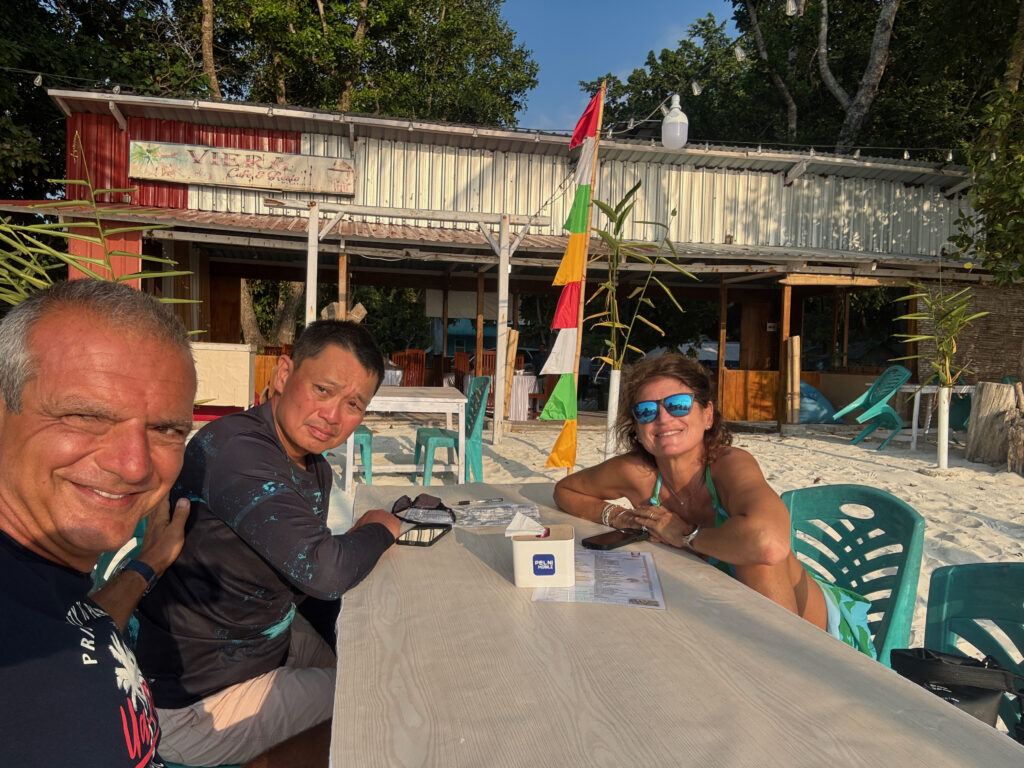
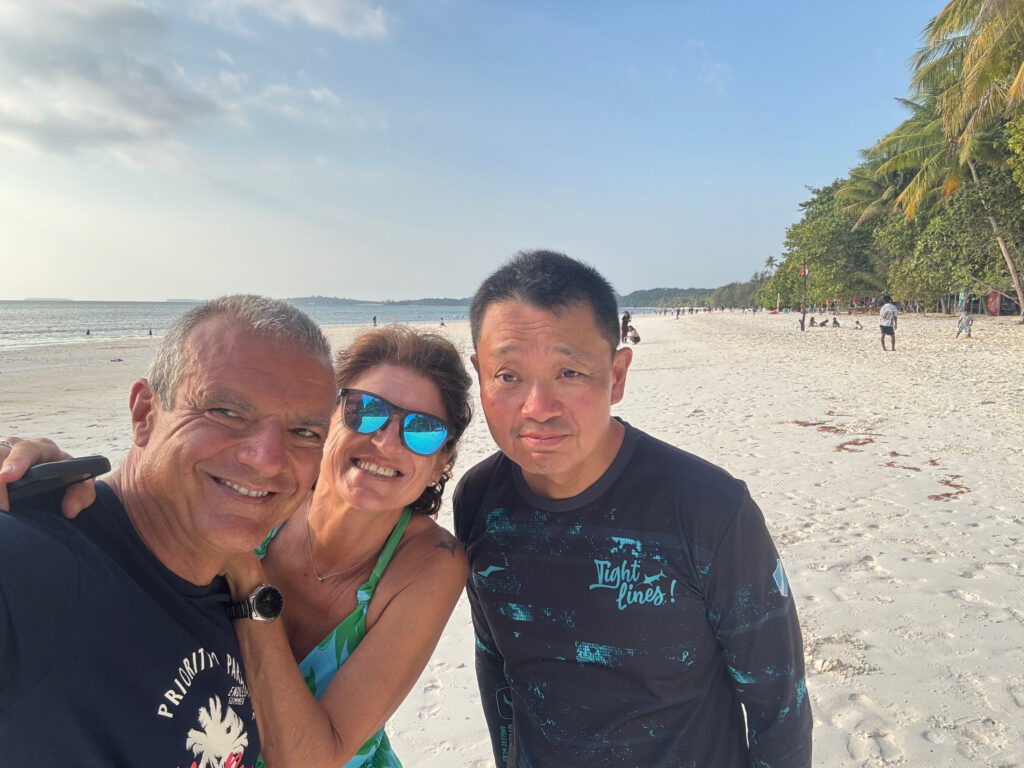
Tim è rimasto con noi fino al 14, e il racconto delle tante cose che abbiamo fatto insieme è su Kei Islands con Tim e poi su Banda Neira, ma la migliore descrizione di questi 10 giorni ce la ha regalata Tim stesso, scrivendo un bellissimo post su Facebook che riporto qui di seguito.
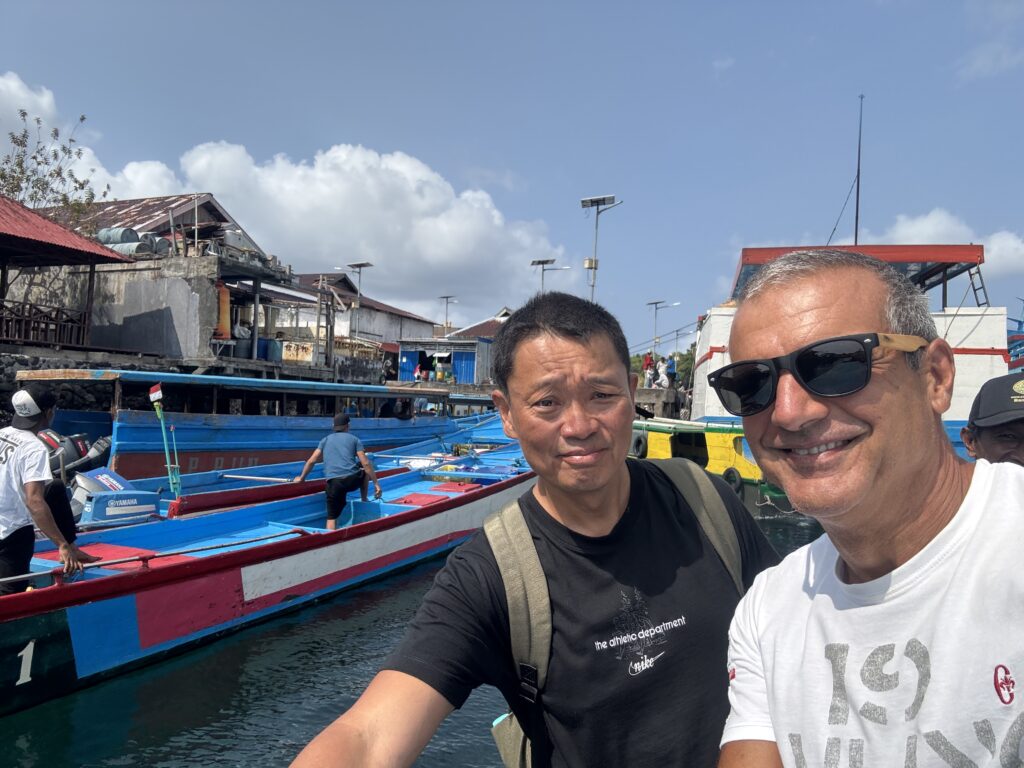
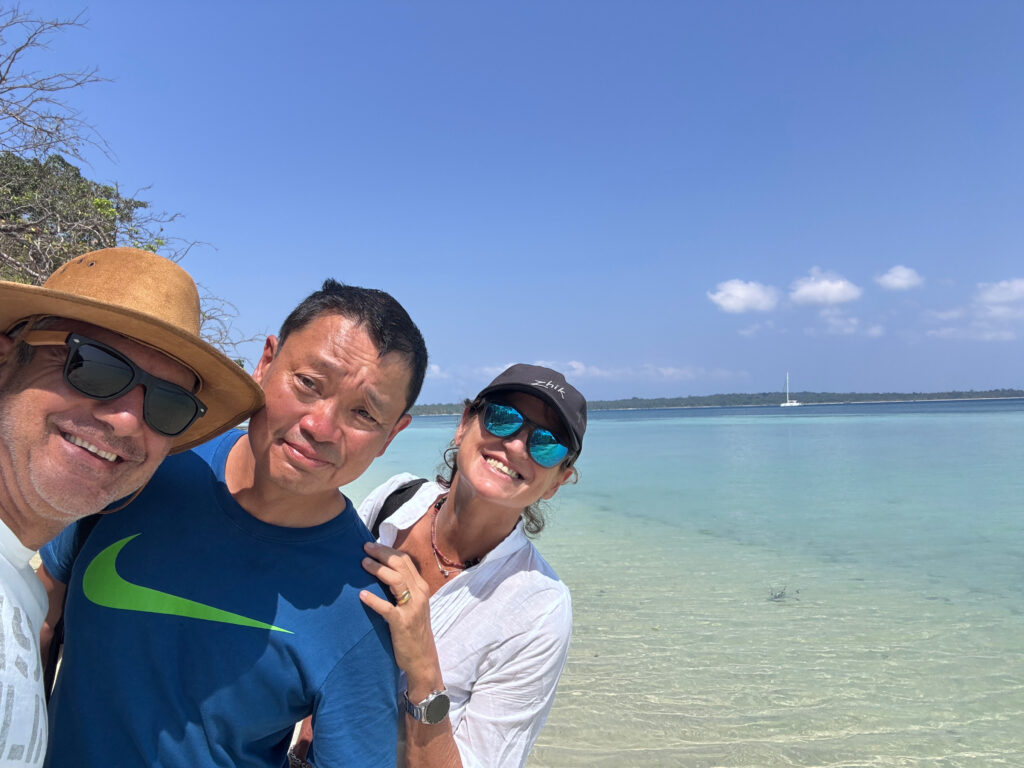
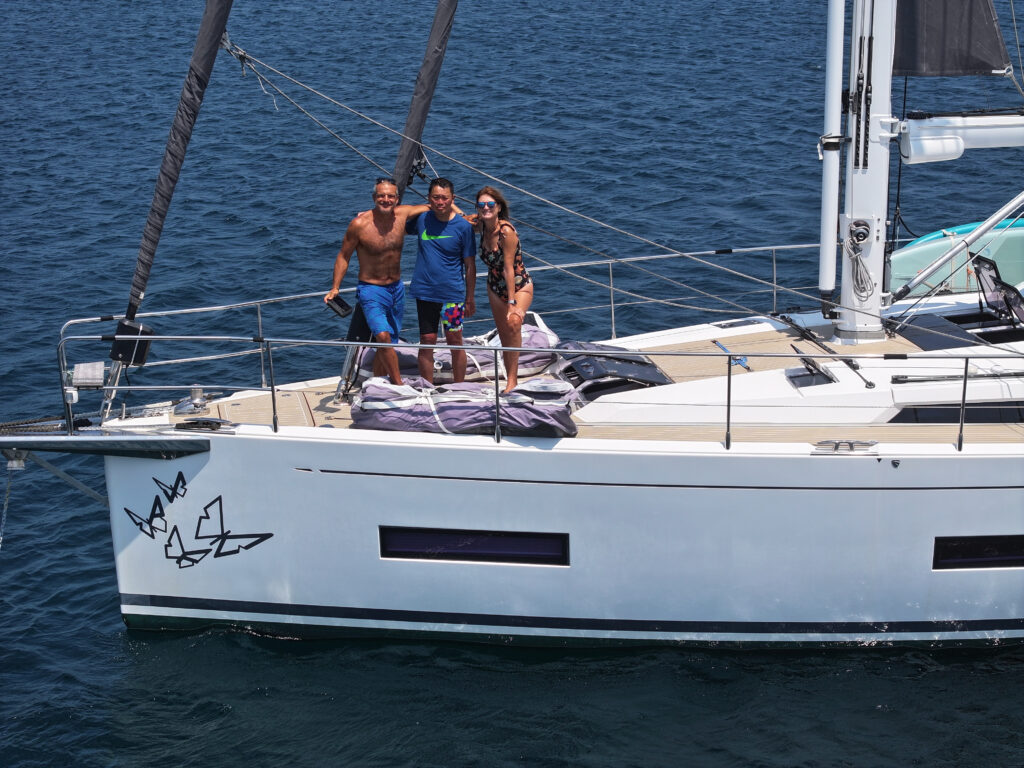
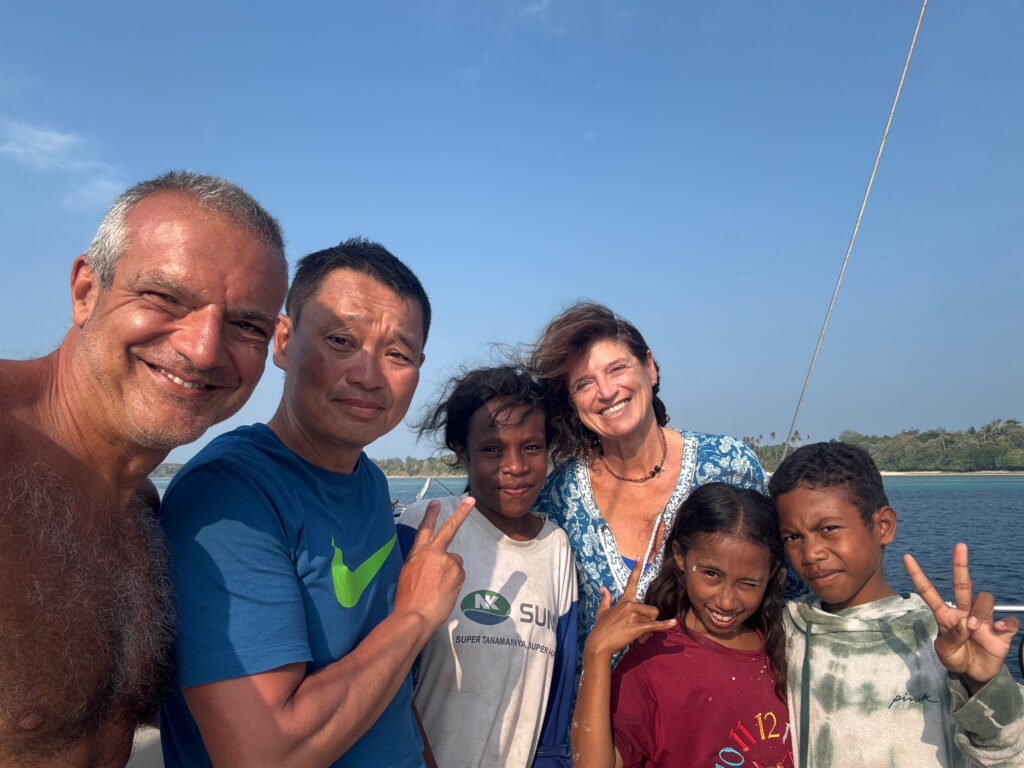
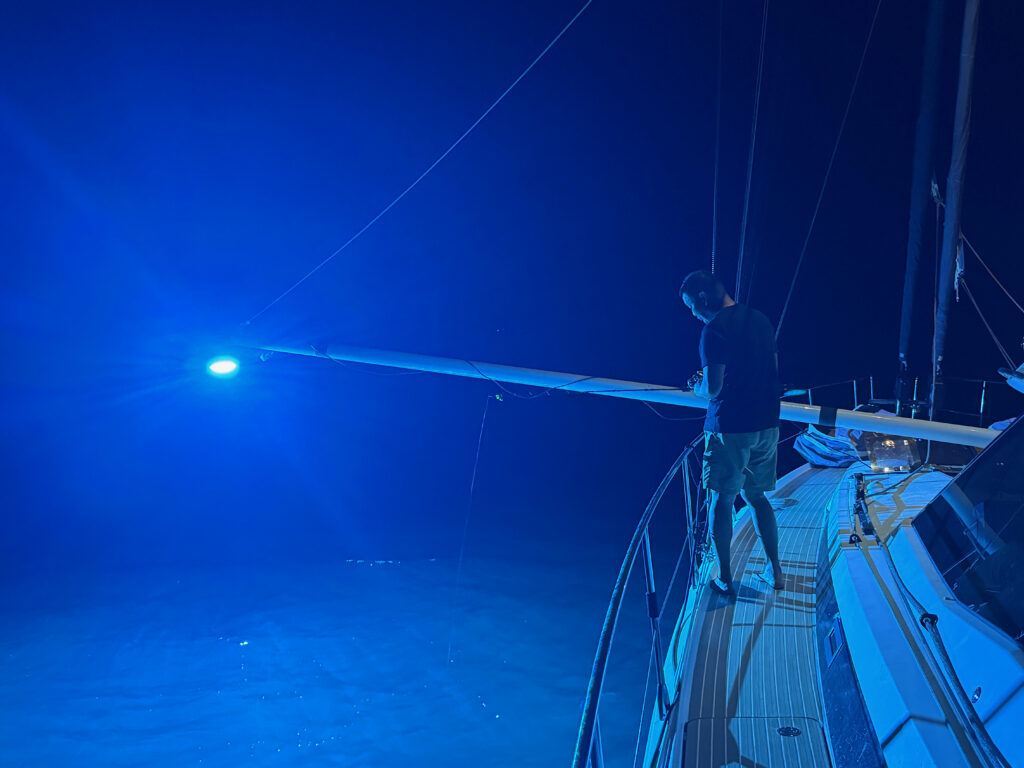
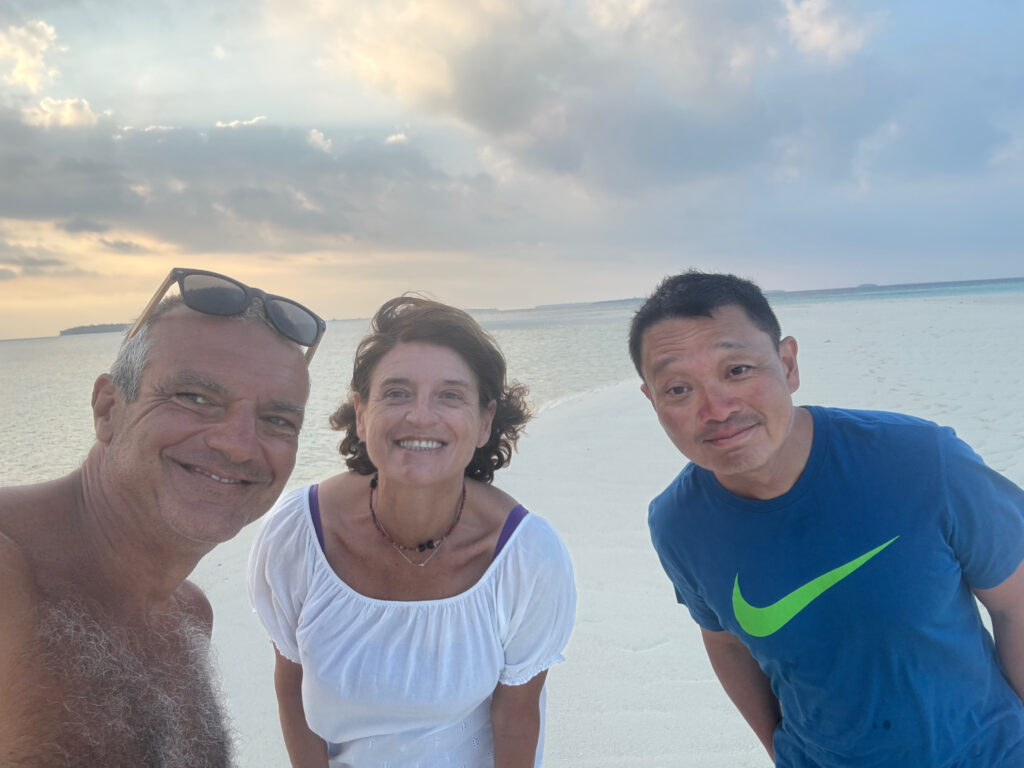
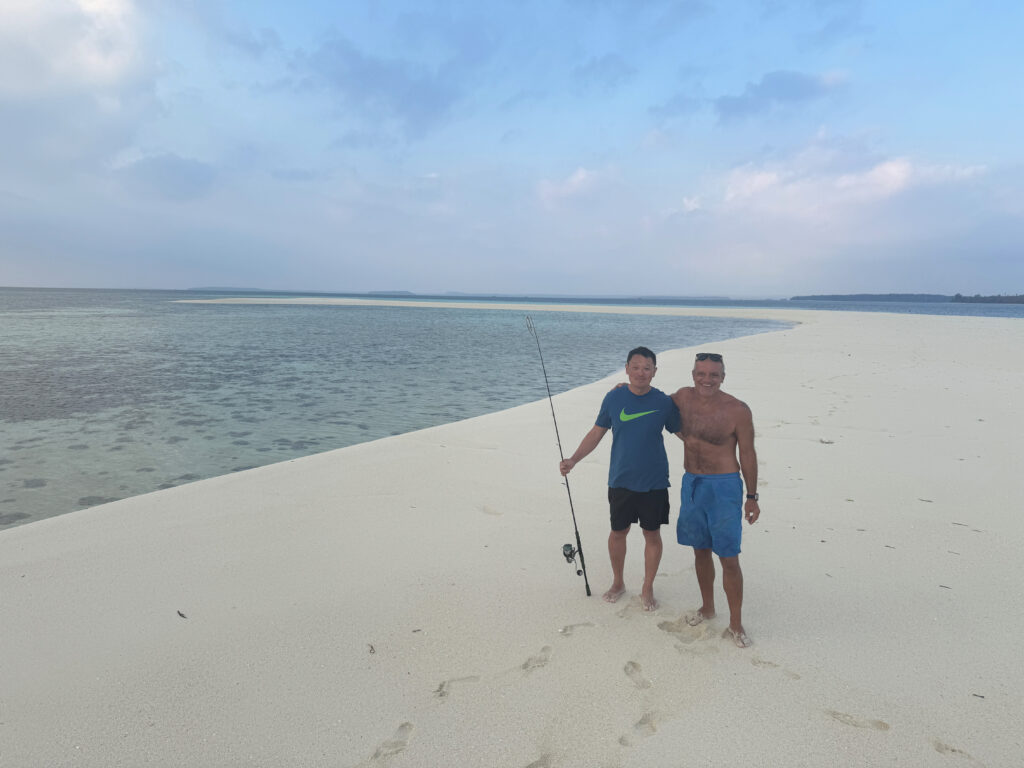
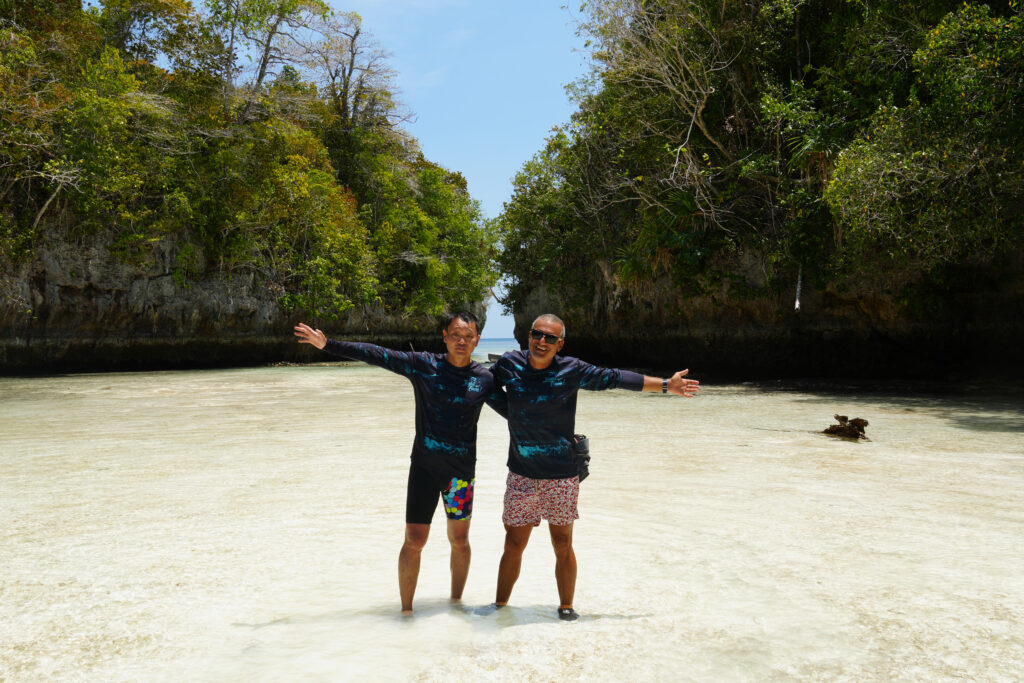
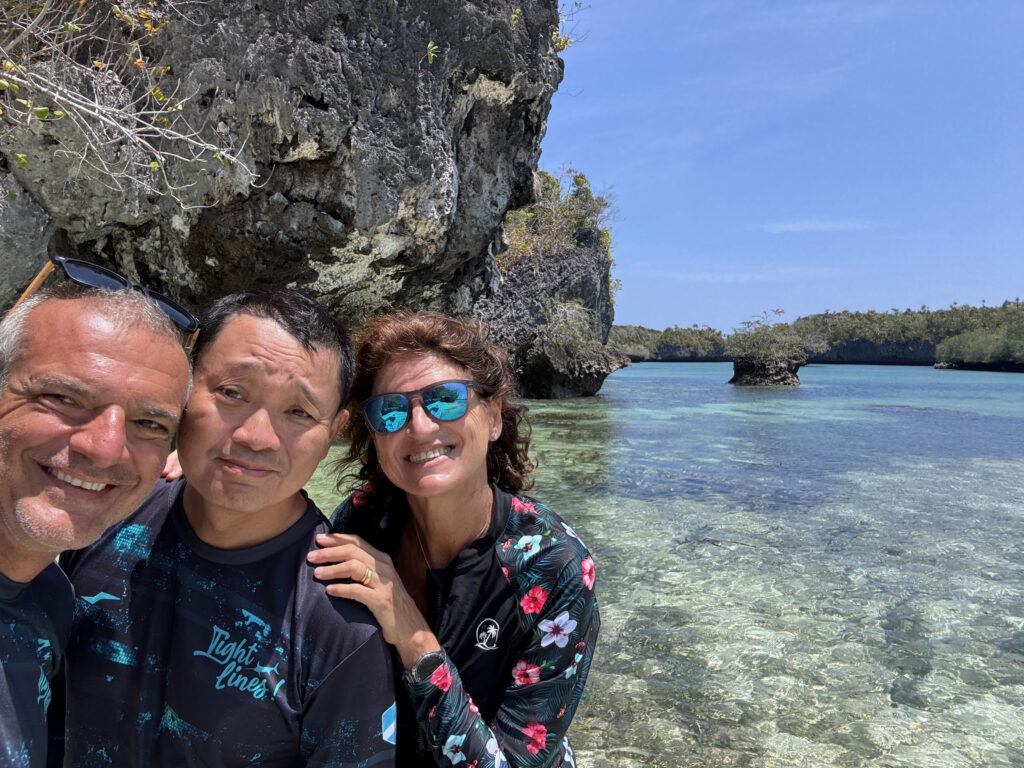

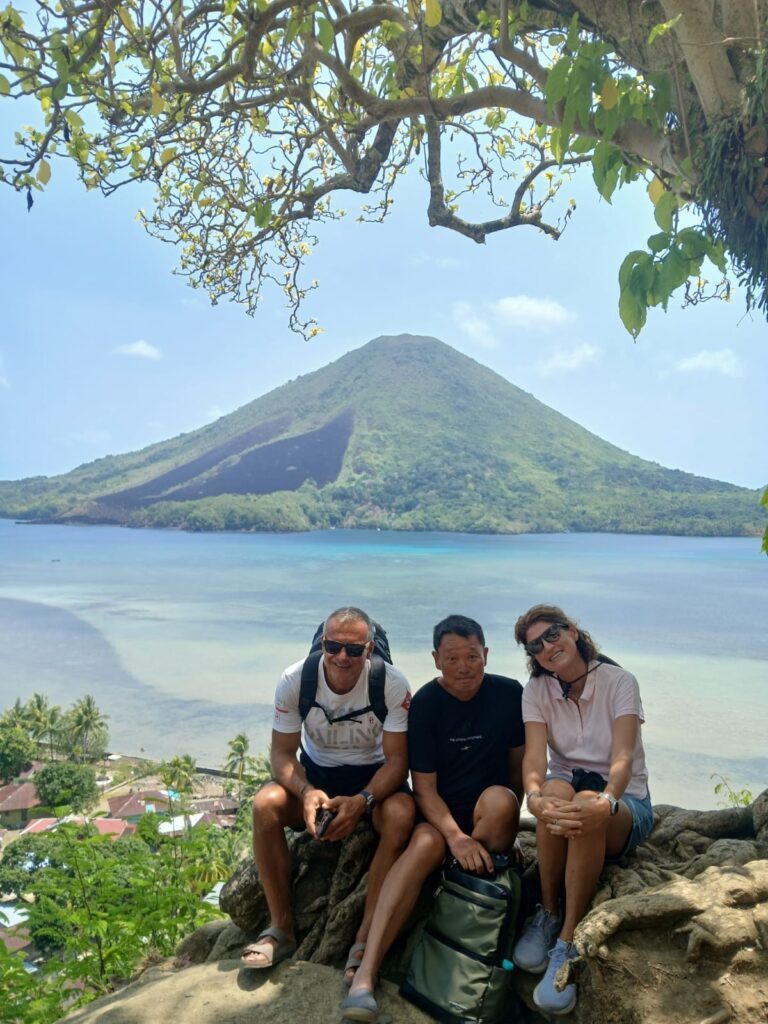
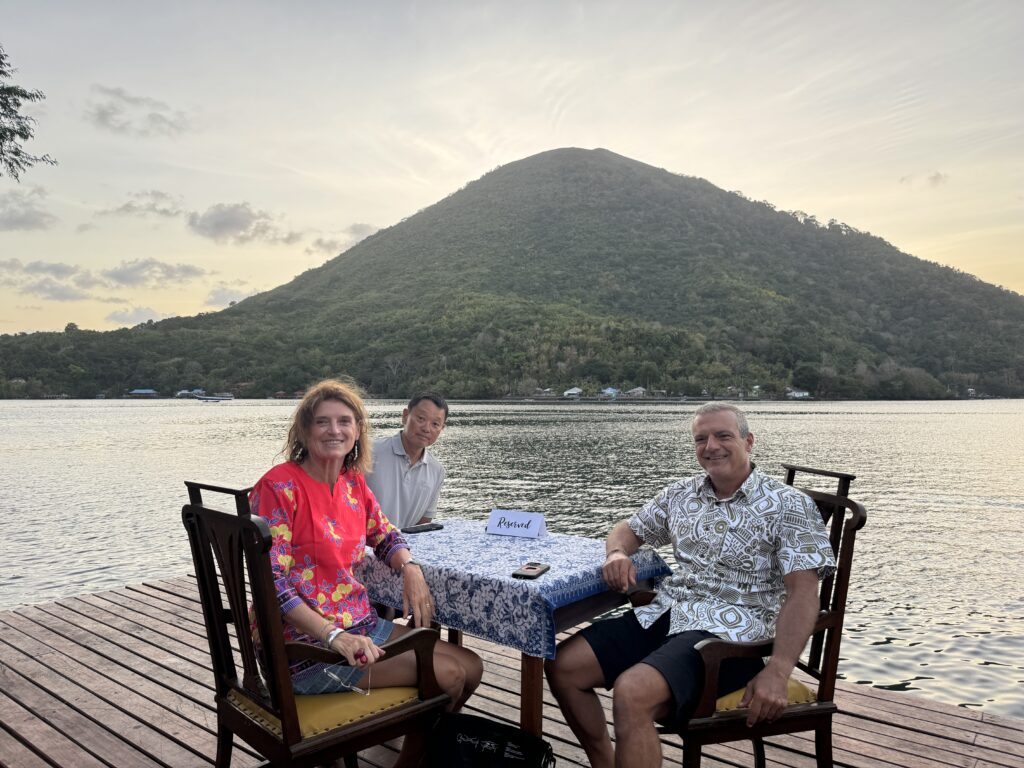
Tipota Through a Visitor’s Eyes
The Kei Islands — A Handshake, 15 Years, and an Adventure at the Edge of Indonesia
By Tim Yoon
PART 1
This is a slightly different Tipota log.
For once, the story is not being told by the Commandant or the Admiral, but by someone fortunate enough to step aboard occasionally, become part of their journey for a little while, and then return to life on land.
And perhaps my journey aboard Tipota really began long before Tipota started sailing round the world.
I have known Fabio since 2011, when he was leading the acquisition of my company in Singapore. We met many times during that period, but there is one meeting in Milan that I still remember particularly well.
We had reached an agreement on the acquisition and Fabio and I shook hands on it.
But there was another promise made around that time.
Fabio told me that one day he was going to sail around the world. And when he did, I would join him for part of the journey — and, naturally, there would be fishing involved.
We shook hands on that too.
At the time, it was one of those wonderful ideas you talk about with a friend: one day…
Fifteen years later, “one day” actually happened.
First came Tonga
Last year, Fabio and Laura invited me to join them aboard Tipota in Tonga.
I spent nine wonderful days with them in October 2025, and it gave me my first glimpse into the life they had created.
Tonga was beautiful, but it was also wonderfully social. There were many other yachts around us, including boats that had travelled the same broad route from the Panama Canal.
Our days were filled with fishing over the reef drop-offs, island hopping and shared dinners, while the evenings brought laughter, friendship and dancing organised by the locals. There was an easy camaraderie among people who had crossed oceans to arrive at the same tiny islands.
In one of those unexpected moments that makes the world feel remarkably small, I even reconnected with a Dutch business competitor who had been based in Shanghai when I knew him more than 20 years ago.
Then I returned home.
Fabio had retired about six months before I did, although retirement in my case has not exactly meant sitting around doing nothing. I remain busy with other business ventures.
But somewhere along the way I developed another daily habit. I started tracking Tipota.
Several times a day, I would find myself checking where Fabio and Laura were in the world. And whenever a new Tipota Takes the World post appeared, I would read it with the anticipation of a small kid waiting for the next episode of his favourite television series or the next book in a series.
Where are they now?
What happened?
Where are they going next?
And when is the next episode coming?
So although I wasn’t physically aboard, in some small way I was following the voyage from afar.
Then the Admiral sent a message
Around the end of June 2026, Laura — the Admiral of Tipota — invited me to join them again.
This time she said: Tual.
My immediate reaction was roughly: Where the hell is Tual? I dropped what I was doing and started Googling.
It turned out to be very, very remote.
Tual lies in the Kei Islands, far out in eastern Indonesia. Getting there from Kuala Lumpur wasn’t going to involve simply buying a ticket and turning up at an airport. It required two or three flights, connections through Indonesia and the sort of logistical planning that the Admiral somehow makes look easy.
And that is one thing anyone who sails aboard Tipota quickly learns.
Fabio may be the Commandant, but Laura is most definitely the Admiral.
She plans their journeys with remarkable skill — flights, connections, immigration requirements, entry and exit procedures, weather, logistics and all the small details that make an expedition like this actually work. My own journey to Tual demonstrated exactly why that matters.
What should have been relatively straightforward turned into nearly two days of travelling, flight changes and wrestling with the inflexibility of local airline reservation systems. Even adding extra luggage for all my gear became an epic email exchange lasting almost two weeks.
Eventually, though, I made it. And after almost twelve months away from Tipota, I arrived back in Tual. Back aboard Tipota
As always, Fabio and Laura were incredibly hospitable.
The Commandant and Admiral met me at the airport, and on the long drive back we stopped at a local wet market to inspect the day’s fish — naturally an important first stop for someone who had travelled across Indonesia carrying fishing equipment.
And then I saw her again. Tipota.
There was a strangely familiar feeling stepping aboard after almost a year. The last time had been Tonga in October 2025. Now we were at the opposite end of Indonesia, surrounded by an entirely different world.
I was simply happy to be back.
But I soon began to suspect that this trip was going to be rather more adventurous than Tonga.
A Sign of Things to Come My first clue came from the Admiral’s choice of reading material.
After Tipota had visited Samoa, Laura had been reading the diary of Robert Louis Stevenson’s wife.
This time, however, she had progressed to a book about a couple whose sailboat was rammed by a whale and sank, leaving them adrift at sea for months. I wasn’t entirely sure this was the sort of inspirational reading I wanted the Admiral doing immediately before we headed into some of the most remote waters of eastern Indonesia.
And as if that wasn’t enough to make me slightly nervous, Indonesia had recently been experiencing volcanic eruptions and earthquakes across different parts of the archipelago.
So there I was, thousands of kilometres from home, about to sail into remote waters surrounded by reefs and active geology, while the Admiral calmly read about people whose yacht had been sunk by a whale.
I began to wonder whether I should have paid a little more attention to the reading list before accepting the invitation.
But then again, this was Tipota. And I was beginning to understand that Tonga had perhaps been the gentle introduction. This time, the real adventure was about to begin.
Little Raja Ampat
Our first real adventure was sailing toward what the locals call Little Raja Ampat.
Getting inside the lagoon was anything but straightforward.
Reefs surrounded us.
Fabio was navigating with Navionics, Google Maps and sonar, carefully trying to identify a safe passage through. As the water became more difficult to read, Laura moved forward to the bow to provide the final pair of eyes, watching for coral heads and rocks directly ahead. For several tense minutes, progress was painfully slow.
From a visitor’s perspective, this was when you suddenly appreciate the difference between looking at beautiful tropical islands on Google Earth and actually bringing a 50-foot yacht safely through a reef system to reach them.
Eventually, we were through. Tipota entered the lagoon safely and we dropped anchor.
Naturally, my first priority was fishing. And I immediately started catching remoras. Not one. Many.
I consulted ChatGPT, which suggested that repeated remora catches could mean large sharks, rays or other big marine animals were somewhere nearby.
That information very quickly put an end to my original plan of swimming laps around Tipota for exercise.
Fishing suddenly seemed the healthier option.
Pulau Bair
The following day brought an entirely different adventure.
We headed toward Pulau Bair, weaving our way through an extraordinary maze of fishing nets, oyster or pearl-farming structures, pontoons and lines stretching across the water.
Along the way I caught two garfish, leaping spectacularly across the surface.
Both went back. Catch and release.
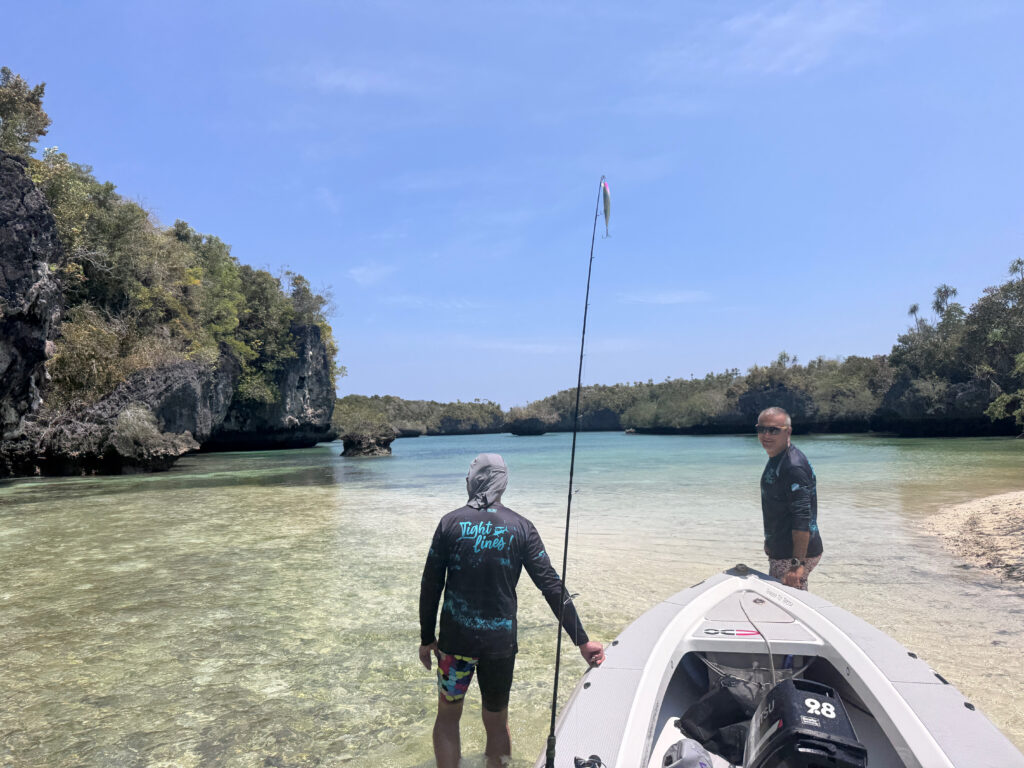
When we finally reached Bair, there was nobody else there. Just us. And it was breathtaking.
The tidal channels running between the limestone formations carried our dinghy in and out almost like a tropical version of white-water rafting — only considerably slower.
We pushed the dinghy deeper into remote little channels, sometimes floating, sometimes dragging it across water that had become too shallow. At one stage the Admiral was out in front, climbing across rocks and coral and pulling the dinghy for several hundred metres. The Commandant and I remained aboard.
I would like the official record to show that this arrangement appeared to work perfectly well.
Eventually Laura succeeded in towing her Commandant, her guest and the dinghy back into deeper water.
And once we reached open sea again, I did what any responsible guest would do after watching the Admiral perform several hundred metres of manual towing.
I started fishing again. The kingfish
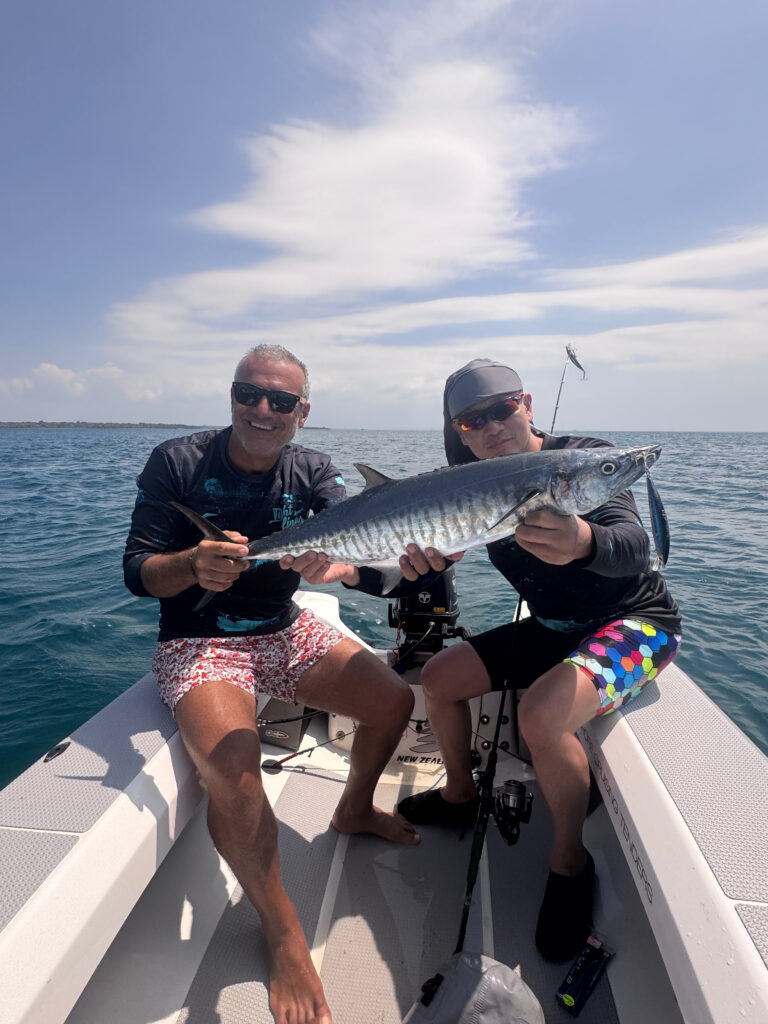
I put out a trolling line. Then something hit. Hard. This was no garfish.
A large Spanish mackerel — what we were calling our kingfish — had taken the lure.
Fabio immediately told me: “Take it slowly.” The fish was big, and we didn’t have a gaff.
So there was no point winning the fight only to lose the fish beside the boat. Slowly we brought it closer.
And somehow, without a gaff, we managed to land it.
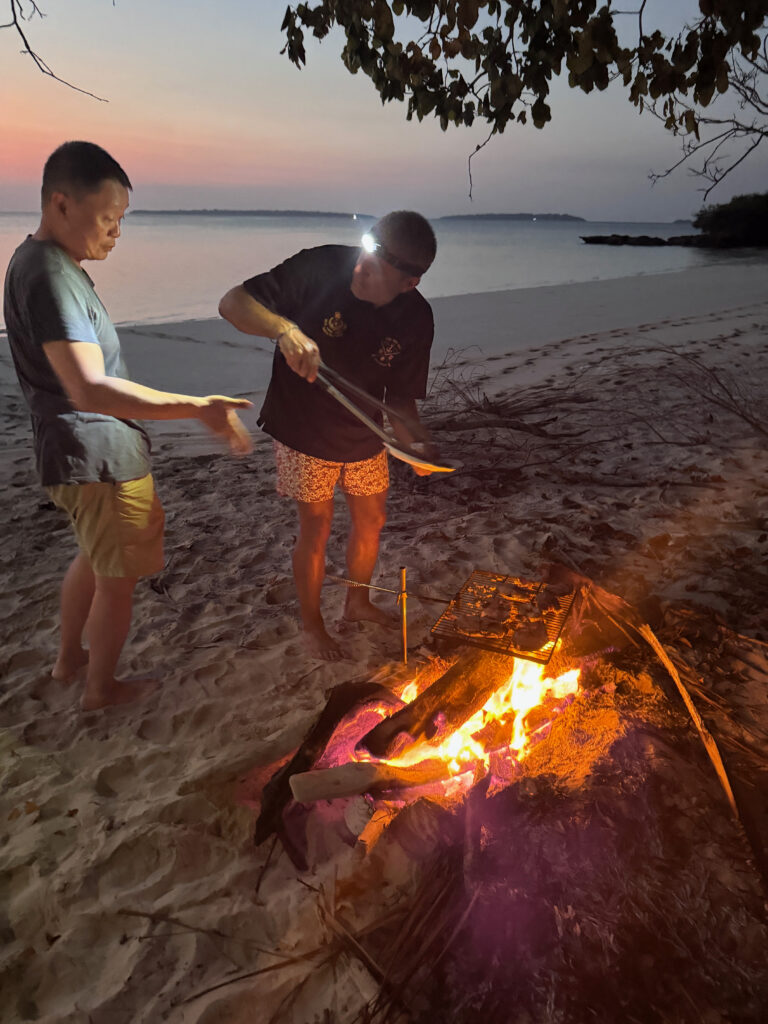
Dinner had just been decided. A bonfire
Later that afternoon Fabio said something wonderfully simple:
“It has been a long time since we’ve made a bonfire.”
So the Commandant selected an island with a beautiful beach, and off we went.
There were no restaurants. No tables waiting for us. No electricity. Nobody bringing drinks.
We had to find our own wood, build the fire and prepare everything ourselves.
I suddenly realised that I hadn’t properly built a bonfire since my Scouting days as a teenager.
And perhaps that was exactly why the evening became so memorable.
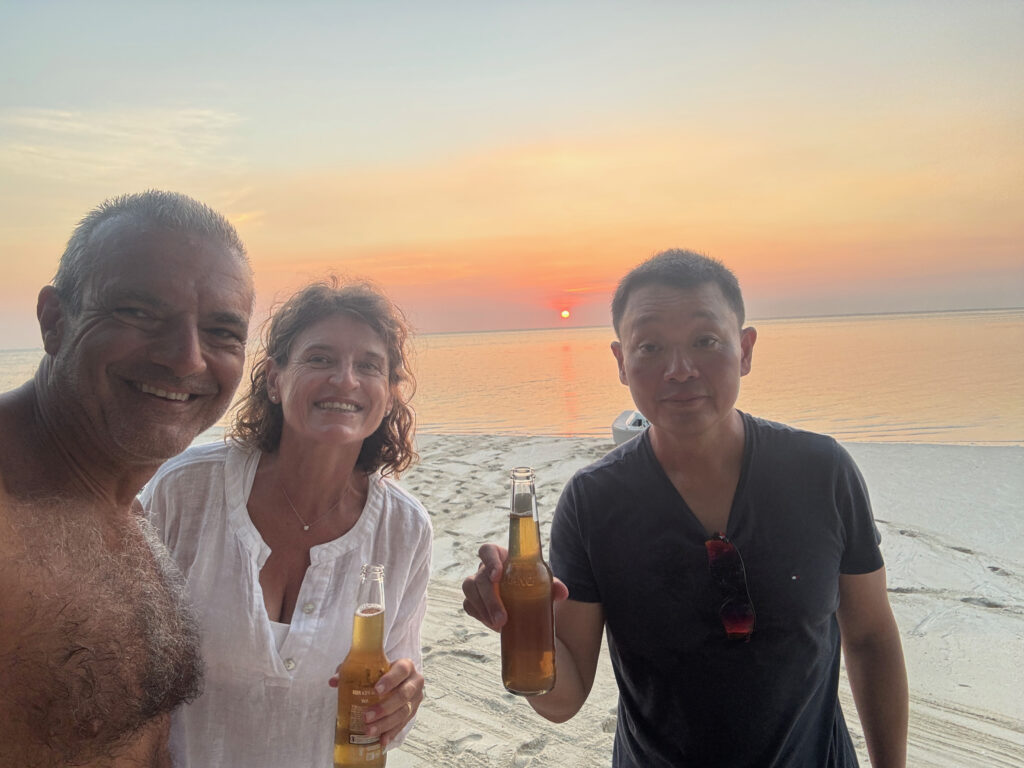
There we were on a remote beach in the Kei Islands, watching the sun disappear over the water, with bread freshly made by Laura and the Spanish mackerel we had caught ourselves cooking over the fire.
I am normally extremely wary of sandflies. But that evening, somehow, even the sandflies didn’t matter.
Because occasionally life gives you a moment when there is nowhere else you need to be. No emails. No meetings. No flights to rearrange. Just three friends, a fire, a fish caught that afternoon, homemade bread, a beautiful sunset — and Tipota waiting quietly offshore.
And perhaps those are the moments you remember longest.
PART 2
A Prelude to Trouble
We woke on Sunday, 6 September, to what had already become a familiar Tipota morning ritual: the Admiral’s signature homemade yoghurt. Very healthy. Very wholesome. And if anyone doubts its effectiveness, just look at Fabio’s lean body now.
Over breakfast, however, news reached us that another yacht nearby — a catamaran — had run onto a reef and was taking on water. They needed help, specifically a type of special underwater repair putty that could be applied to the damaged hull even while it was wet. Suddenly, the reefs we had so carefully navigated through ourselves the previous day felt a little less picturesque.
This was no longer simply about looking at coral heads from the bow and admiring beautiful turquoise lagoons. Out here, hitting a reef could very quickly become a serious problem.
Fortunately, the crew managed to seal the leak sufficiently to keep the catamaran going.
At the time, that was all I really knew.
But in one of those strange coincidences that seems to happen when travelling through remote places, I would discover the rest of the story a week later — completely by chance.
A Chance Meeting in Ambon
A week later, after leaving Tipota and making my way home, I was at Ambon Airport when I noticed a South African guy having problems arranging his excess luggage online. Naturally, after my own recent battles with Indonesian airline booking systems, I had acquired rather more experience in this subject than I ever wanted.
So I helped him. His name was Kevin.
We started talking, and somehow the conversation turned to sailing.
He mentioned that he had just come from Tual and had been aboard a catamaran.
Then he told me their catamaran had hit a reef and punched a hole in the hull.
I looked at him. “You’re from THAT catamaran?” What were the chances?
Here we were, a week later and hundreds of kilometres away, standing in an airport — and completely by coincidence I was helping one of the crew from the very boat whose emergency we had heard about over breakfast aboard Tipota.
Kevin filled in the missing pieces.
The underwater seal had worked, but it was only temporary. They had managed to keep the boat afloat and sailed her very slowly to Banda Neira. And the damaged hull wasn’t their only problem.
Their watermaker had also broken down, and according to Kevin, the boat was generally not in very good shape.
Even more coincidentally, Kevin had caught the same ferry I was on from Banda Neira to Ambon the previous morning. Somehow we hadn’t met aboard the ferry, only to bump into each other the following day at Ambon Airport.
It was a reminder of something I was beginning to understand about sailing in this part of the world.
The beautiful isolation is precisely what makes places like the Kei Islands so extraordinary.
But that isolation has another side.
There isn’t necessarily a marina around the corner. There isn’t always a technician, spare part or boatyard nearby. If you hit something, break something or start taking on water, you may have to solve the problem yourself with whatever you have aboard — and then somehow nurse the boat hundreds of kilometres to somewhere that can help.
This could have happened to any boat.
No matter how experienced the crew, how sophisticated the navigation equipment or how carefully a route is planned, remote reef-filled waters leave very little margin for error.
Suddenly I had even greater appreciation for the Commandant carefully studying Navionics, Google Maps and sonar, and for the Admiral standing at the bow watching every metre of water as we threaded Tipota through the reefs.
The day before, I had thought they were being extremely cautious.
After hearing about the catamaran, I decided they could be as cautious as they liked.
And all this before we had even finished the Admiral’s yoghurt.
At the time, none of us could have imagined that only a few hours later, reefs would become very personal to us too.
Suddenly things can go very wrong.
PART 3
Almost two weeks since I returned home, I finally felt I had to sit down and write this chapter of the adventure.
Not because it was the most beautiful part of the journey, nor the most relaxing — quite the opposite.
After breakfast, we raised anchor and began making our way out of the lagoon.
This time, strangely, it seemed almost easy.
The Commandant simply retraced the exact route we had taken through the reefs on the way in, following Tipota’s previous track back towards open water. After the tension of our arrival, there was something reassuring about watching her quietly retrace her own footsteps through the coral.
Our next destination was Ngurbloat Beach, reputed to have some of the finest white sand in Indonesia.
For sailors travelling through remote places like these, there is a very useful app called NoForeignLand. It is essentially a worldwide community of sailors sharing information about anchorages — where to drop anchor, safe approaches, reefs and hazards, and sometimes warnings about theft, difficult encounters or other problems experienced by boats before them.
The reports for Ngurbloat were reassuring. The approach was considered safe.
So in we went.
Fabio — the Commandant — was at the controls, surrounded by the modern navigator’s arsenal: radar, Navionics, Google Maps and sonar.
Laura — the Admiral — was where she so often was when we entered uncertain waters: right at the bow, staring into the sea, searching for reefs and bommies — isolated coral heads capable of rising almost vertically from deep water.
I was trying to help as a second pair of eyes.
And looking into that beautiful blue water, everything seemed perfectly fine to me.
Deep water. Nothing obvious. Nothing worrying.
Then suddenly the Admiral screamed through the headset:
“FABIO! FABIO! BOMMIES!”
Fabio and Laura have a sophisticated wireless communication system that normally makes them look rather like aircraft-carrier deckhands directing fighter jets.
Usually it works brilliantly. But I can assure you of one thing: When Laura starts shouting “FABIO! FABIO!” through it, something serious is happening.
I looked down again. And suddenly I could see them. Coral heads seemed to be everywhere.
It was extraordinary how quickly the underwater landscape had changed. One moment we appeared to have tens of metres beneath us. The next, the seabed seemed to be rushing upwards towards Tipota.
Then we felt it. Tipota touched the bommie.
For a moment, everything changed.
Only that morning we had heard about a catamaran that had struck a reef, punctured its hull and started taking on water.
Now we had just hit coral ourselves.
The depth had gone from tens of metres to only a few metres almost instantaneously.
Fabio and Laura began speaking rapidly in Italian.
I don’t speak Italian. At that particular moment, however, no translation was necessary.
This could be serious.
The Admiral
What happened next told me more about Laura than perhaps anything else during my time aboard Tipota.
There was no hesitation.
The instant Laura realised that Tipota might be stuck on the coral, she ran towards the stern and began lowering the dinghy.
Her instinct was extraordinary.
She wanted to get into that little dinghy, race alongside Tipota towards the reef and somehow physically push their 50-foot yacht away from the coral. Whether that would actually have been possible was almost beside the point.
What struck me was that Laura didn’t freeze. She didn’t stand there asking what they should do. She didn’t wait for Fabio to tell her.
Her first instinct was simply: Protect Tipota. This was not merely a yacht to them.
For three years, Tipota had been their home. She had carried Fabio and Laura across oceans, through storms, into remote islands and safely through thousands upon thousands of miles of open sea.
And now Laura was prepared to jump into a dinghy beside a reef and do whatever she could to save her.I remember looking at her and thinking: My God, this woman is brave.
The Commandant
And then there was Fabio.
While Laura reacted with instinct and urgency, Fabio reacted in an entirely different way.
He became calm. Almost unnervingly calm. No panic. No wild movements on the controls. No desperate burst of power.
The Commandant assessed what was happening, put Tipota carefully into reverse and began applying power.
For a few very long seconds, nothing seemed certain.
Would she move? Were we sitting on the coral? Had something underneath already been damaged?
Then— Tipota moved. Slowly at first. Then backwards. We were free.
Fabio continued reversing until there was proper water beneath us again.
Only then did everyone begin to breathe.
But there was one question none of us particularly wanted answered.
What had happened underneath the boat?
The Longest Few Minutes
Fabio went into the water.
He disappeared beneath Tipota to inspect the hull and, most importantly, the rudders.
Laura and I waited. Those few minutes felt considerably longer than they probably were.
Then Fabio surfaced. And somehow, incredibly, the news was good. Nothing. No visible damage. Not even a scratch.
The rudders were working perfectly. The relief was enormous.
And the timing made it even more extraordinary.That very morning we had heard the story of another yacht hitting a reef, puncturing its hull and taking on water.
A few hours later, it had almost been our turn. Later, Fabio told me something that made the incident even more significant.
In three years of sailing Tipota around the world, through countless reefs, islands, lagoons and anchorages, this was the first time she had ever touched a reef.
Three years. One touch. And somehow, not even a scratch.
What I Saw in Fabio and Laura
That evening, all three of us said our prayers and thanked God.
Because we knew.
A few centimetres differently, a slightly sharper piece of coral, damage to a rudder or a puncture below the waterline, and this chapter of our adventure could have ended very differently.
But what stayed with me most wasn’t the coral.
It was Fabio and Laura.
In those few seconds, I saw two completely different reactions to danger — and somehow they complemented each other perfectly. Laura was instinct. Move. Act. Protect the boat.
Fabio was calculation. Stay calm. Understand what is happening. Get the boat out.
The Admiral was already preparing to launch herself into a dinghy.
The Commandant was quietly reversing their 50-foot yacht off the reef.
And perhaps that combination explains something about how these two people had managed to sail Tipota safely halfway around the world. In many ways, it also reflects the life they have built together – successful careers, raised four wonderful daughters, and now taking on the oceans side by side.
Calm and Courage, each complementing the other when it matters most.
2 Comments
Siete i tre moschettieri! Persone come TIm sono merce molto, molto rara … E Voi non siete da meno! Continuate così!
Chi trova un amico trova un tesoro, è il vostro caso, la fortuna è con voi 🙏